Some links in this post are affiliate links. If you buy through them, TCG Central may earn a small commission at no extra cost to you. Links to the TCG Central eBay store are our own listings. This never changes which products we recommend — see our affiliate disclosure.
What Is Edison Format YuGiOh? A Complete Breakdown

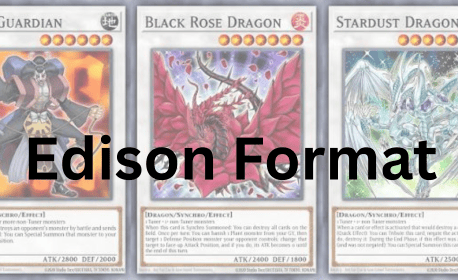
Edison format YuGiOh is the single most popular alternative format in competitive Yu-Gi-Oh right now. If you’ve been away from the game for a while, or you’re fed up with how fast modern Yu-Gi-Oh moves, this is probably the format that will pull you back in. The name comes from the Shonen Jump Championship held in Edison, New Jersey in April 2010. The format snapshot is frozen to that exact point: the March 2010 banlist, with every card legal up through and including The Shining Darkness.
Why does that specific moment matter? April 2010 sits in what many players consider the golden window of synchro-era Yu-Gi-Oh. XYZ monsters didn’t exist yet. Pendulums and Links were years away. The card pool was large enough to support a dozen viable strategies but small enough that every matchup still felt interactive and skill-testing. Trap cards actually resolved. Games lasted more than two turns. The power ceiling was high, with synchro monsters like Stardust Dragon, Goyo Guardian, and Brionac, Dragon of the Ice Barrier giving you enormous payoff for sequencing correctly. But that ceiling wasn’t so high that a single combo ended the game on the spot.
What you get is a format where deckbuilding decisions matter deeply, side decking is an art form, and individual card advantage trades decide games. If you’ve played modern Yu-Gi-Oh and felt like the outcome was decided before you got to make a meaningful choice, Edison format YuGiOh is the direct antidote. The community has grown every single year since players started organizing unofficial events around 2018, and by 2026 it’s easier to find an Edison local or online tournament than it was to find a Goat format event five years ago.
The format is community-run. There’s no official Konami sanction. The banlist, tournament rules, and community standards are all maintained by the players who love it. That grassroots energy is a huge part of why the format feels the way it does: passionate, welcoming, and refreshingly focused on gameplay over product hype.
Edison Format Rules, Banlist, and How It Differs from Modern YuGiOh
What is Edison format in Yu-Gi-Oh and why is it called Edison?
As mentioned above, the format takes its name from the Edison, New Jersey Shonen Jump Championship held in April 2010. The community chose this specific snapshot because it represents peak diversity of the synchro era, before later power creep from sets like Duelist Revolution narrowed the competitive field. The name stuck, and now “Edison” is shorthand for the entire March 2010 format experience.
What cards are banned in Edison Format and where can I find the official banlist?
The Edison format banlist is the official Konami TCG March 2010 Forbidden and Limited list. Dark Armed Dragon sits at one, Heavy Storm is forbidden, Monster Reborn is at one, and key power cards are carefully distributed. The community-maintained banlist is hosted on the Edison Format Discord server and on edisonformat.com. Both are updated whenever the community votes on any minor adjustments, which are rare and carefully debated.
Key differences from modern Yu-Gi-Oh that you’ll feel immediately:
- No Extra Monster Zone. The field layout uses the original five monster zones and five spell/trap zones, plus a single field spell zone. The Extra Deck (still called the Fusion Deck in some older terminology, but functionally the Extra Deck by 2010) is capped at 15 cards.
- No XYZ, Pendulum, or Link monsters. Your Extra Deck is Fusion and Synchro monsters only.
- Ignition Effect Priority exists. This is the single biggest mechanical difference from modern play. When you Normal Summon or Special Summon a monster with an Ignition Effect, you can activate that effect before your opponent can respond with a card like Bottomless Trap Hole. This changes the entire game. More on this in the mechanics section below.
- No Problem-Solving Card Text (PSCT). Cards use the older text style. If you’re used to modern formatting with semicolons separating costs from effects, you’ll need to learn to read 2010-era card text. Or just keep a phone handy for rulings.
- The pace is dramatically slower. Games regularly go 8–15 turns. Trap cards are live, battle traps matter, and resource management over multiple turns is the core skill.
For the full list of every banned, limited, and semi-limited card, the Edison Format community site and Discord are the definitive sources. Checking our coverage of yugioh banlist updates and changes for context on how these lists have evolved across eras is also worth your time.
Why play Edison Format instead of modern Yu-Gi-Oh?
Modern Yu-Gi-Oh is a fantastic game, but it bears little resemblance to what it was fifteen years ago. Turn structures, combo lengths, and the sheer volume of card interactions per turn have scaled to a point where many players feel the game has drifted from what they originally loved. Edison format YuGiOh offers a competitive, balanced, skill-intensive alternative that still rewards deep knowledge and tight play, just at a pace where you can breathe between decisions. You’re not watching your opponent play solitaire for four minutes. You’re making real choices every turn, and so are they.
Edison Format vs Goat Format: Which Retro Format Is Right for You?

Which Yu-Gi-Oh format is better, Goat or Edison, and what are the key differences?
Every returning player asks this, and the answer depends entirely on what you want out of the game. Both Goat format and Edison format YuGiOh are community-maintained retro formats with passionate playerbases. Both reward skill, punish misplays, and feel dramatically different from modern Yu-Gi-Oh. But they play like two completely different games.
Goat format is frozen to April 2005, before Synchro Summoning existed. The card pool is much smaller. Games revolve around Airknight Parshath, Thousand-Eyes Restrict, Black Luster Soldier – Envoy of the Beginning, and the iconic Scapegoat plus Metamorphosis combo that gives the format its name. It’s the slowest competitive Yu-Gi-Oh you’ll ever play, with every single card trade mattering enormously. If you enjoy chess-like attrition, Goat is your format. Our goat format yugioh guide covers everything you need to get started there.
Edison is faster. It has a wider card pool, more viable strategies, and the explosive ceiling of Synchro Summoning. Decision trees are more complex because you have more tools at every point in the game. Trap cards still matter (this is not modern combo Yu-Gi-Oh), but the games have a dynamism that Goat doesn’t offer.
| Feature | Goat Format (April 2005) | Edison Format (March 2010) |
|---|---|---|
| Card Pool | Smaller — up to The Lost Millennium | Larger — up to The Shining Darkness |
| Extra Deck Types | Fusion only | Fusion and Synchro |
| Average Game Length | 15-25+ turns | 8-15 turns |
| Number of Viable Decks | 4-6 competitive | 10-15+ competitive |
| Key Mechanic | Flip effects, Metamorphosis, Treeborn Frog tributing | Synchro climbing, ignition priority, trap timing |
| Budget Entry Cost | $30-$80 for a competitive deck | $40-$150 for a competitive deck |
| Community Size (2026) | Large and stable | Growing rapidly — largest alternative format |
| Skill Emphasis | Resource management, card-for-card trades | Sequencing, side decking, Extra Deck routing |
| Best For | Purists, slow-game lovers, minimal variance | Players who want depth AND variety |
If you want the deepest possible strategic experience in the smallest possible card pool, Goat is incredible. If you want a format where you could play a dozen different events and face a dozen different decks, where Synchro Summoning gives you explosive midgame turns, Edison is where you want to be. For most returning players in 2026, Edison format YuGiOh is the better starting point because the community is larger, deck variety is greater, and the learning curve, while real, leads to a game that stays fresh for a long time.
The Best Decks in Edison Format: Full Tier List for 2026

What is the best deck in Edison Format and what are the current top-tier options?
Edison format YuGiOh has one of the healthiest tier distributions in any Yu-Gi-Oh format, past or present. No single deck dominates. The “best” deck shifts depending on what the rest of your local or online meta is playing, and side deck construction matters as much as main deck choices. That said, the community has settled into a clear hierarchy based on years of tournament results.
Tier 1
Quickdraw Dandywarrior (Quickdraw Plants) is the format’s most iconic and arguably most skill-testing deck. The engine is elegant: Quickdraw Synchron discards a monster (usually Dandylion or a Lightsworn hunter target) to Special Summon itself, then synchro climbs into powerful monsters like Drill Warrior, Junk Destroyer, or Nitro Warrior. Dandylion generates tokens when sent to the graveyard, fueling further synchro plays or providing tribute fodder. The deck grinds, it combos, it adapts. A strong Quickdraw player will never play the same game twice.
Core ratios: 2-3 Quickdraw Synchron, 1-2 Dandylion, 2-3 Lonefire Blossom, 1 Spore, 1 Glow-Up Bulb, 2-3 Ryko Lightsworn Hunter, 2-3 Caius the Shadow Monarch, 1 Treeborn Frog. The spell and trap lineup typically runs Book of Moon, Brain Control, Foolish Burial, Enemy Controller, and a heavy trap suite including Bottomless Trap Hole, Torrential Tribute, and often Dust Tornado or Trap Stun.
X-Sabers are the format’s combo deck. XX-Saber Faultroll enables explosive Synchro Summon sequences, and XX-Saber Emmersblade provides a recruiter engine that grinds surprisingly well. The hand-rip play through XX-Saber Gottoms is one of the most feared sequences in Edison. X-Sabers punish slower decks and can close games quickly, but they’re somewhat fragile to well-timed trap cards.
Infernity offers a high ceiling with high risk. Infernity Archfiend and Infernity Launcher create devastating loops when your hand is empty, generating multiple Synchro Summons in a single turn. The deck can produce fields that are nearly impossible to break, but it requires very precise sequencing and crumbles to disruption before it gets rolling. Not the best choice for a first Edison deck, but terrifying in experienced hands.
Tier 2
Gladiator Beast is one of the most respected decks in the format and arguably the best “fair” strategy. Gladiator Beast monsters tag out after battle, triggering powerful effects. Bestiari destroys a spell or trap, Murmillo destroys a monster, and Gyzarus (a Contact Fusion) blows up two cards on arrival. The deck is trap-heavy, patient, and deeply rewarding to play well. Every battle phase decision matters.
Lightsworn (LS) still packs a punch. Lumina, Lightsworn Summoner enables Synchro plays, Judgment Dragon threatens board wipes, and the random mill element means every game has variance. Lightsworn hunter monsters like Ryko provide both removal and graveyard setup. The deck can steal games no other strategy could, but it can also mill all its key cards face-down into the grave and leave you with nothing. High highs, painful lows.
Blackwings present an aggressive Synchro strategy with excellent swarming capability. Black Whirlwind searches on Normal Summon, Blackwing – Gale the Whirlwind is one of the best tuners in the format, and the deck generates powerful synchro monsters quickly. Consistent and linear, which is both its strength (easy to pilot) and its weakness (predictable for experienced opponents).
Vayu Turbo is a graveyard-focused variant of Blackwings that uses Blackwing – Vayu the Emblem of Honor to Synchro Summon from the graveyard. It bypasses normal summoning restrictions and can produce threats like Blackwing Armed Wing and Blackwing Armor Master without using the field at all. Harder to disrupt than standard Blackwings but more reliant on specific graveyard setup.
Tier 3 (Viable and Dangerous)
Monarchs (Frog Monarchs / Treeborn Monarch) run on a simple but devastating engine. Treeborn Frog revives itself every Standby Phase if you control no spells/traps, providing a free tribute every turn. Caius the Shadow Monarch and Raiza the Storm Monarch generate oppressive advantage when tributed consistently. The deck runs almost no continuous spells or traps to keep Treeborn Frog live, giving it a unique deckbuilding constraint that experienced players love working around.
Flamvell Cat (Rescue Cat Synchro) uses Rescue Cat into two Level 3 Beasts to open Synchro plays, and Flamvell Firedog provides a secondary engine. Explosive but reliant on resolving Rescue Cat.
Anti-Meta / Stun runs Thunder King Rai-Oh, Doomcaliber Knight, Fossil Dyna Pachycephalo, and a mountain of trap cards. Simple, effective, and extremely budget-friendly. This approach punishes greedy deckbuilding and can steal tournaments when the meta is unprepared.
Zombie Synchro fuels itself through Mezuki and Plaguespreader Zombie’s recursive Synchro engine. Goblin Zombie searches on death. The deck grinds incredibly well and has surprising reach into powerful synchro monsters.
This isn’t an exhaustive list, either. Scraps, Machina Gadget, Hero variants, Chain Burn, and even Gravekeeper’s all see competitive play. That depth is exactly why Edison format YuGiOh has stayed vibrant for so long.
Key Cards and Staples Every Edison Player Needs

Regardless of which deck you choose, certain cards appear across nearly every Edison format YuGiOh list. Knowing these staples, and why they matter, is the fastest way to understand the format’s texture.
Monster Staples
Gorz the Emissary of Darkness is the format’s defining bluff card. If your field and hand are positioned to drop Gorz when you take battle damage, your opponent has to respect it every single time. Gorz warps how players attack and creates enormous skill expression around when to push and when to hold back.
Treeborn Frog shows up in Monarchs, Quickdraw variants, and any strategy that wants a free body every turn. The restriction (no face-up spells/traps) creates real deckbuilding tension.
Breaker the Magical Warrior is a one-of in many decks. Pops a spell/trap on summon and swings as a 1900 beater. Clean, efficient, always useful.
Caius the Shadow Monarch banishes any card on tribute summon. Appears in Monarchs, Quickdraw, and sometimes even Gladiator Beast builds as a flexible removal option.
Ryko, Lightsworn Hunter destroys any card on flip and mills three. Shows up in far more decks than just Lightsworns because the floor (destroy something and fuel your graveyard) is so high.
Spell Staples
Book of Moon is the single most skill-testing card in the format. Flipping a monster face-down disrupts attacks, resets flip effects, dodges targeting, and interacts with almost every board state differently. Limited to one copy, and it matters in every single game.
Brain Control lets you pay 800 LP and take your opponent’s monster. The tempo swing is enormous. The card enables tribute plays, synchro plays, and lethal attacks that would otherwise be impossible.
Foolish Burial sends any monster from deck to graveyard. The number of combos this enables in Edison is absurd: Dandylion tokens, Treeborn Frog recursion, Plaguespreader Zombie setup, Glow-Up Bulb access.
Enemy Controller is a versatile quick-play that either shifts a monster to defense or tributes a monster to steal an opponent’s. The tribute cost creates incredible decision points, especially when you tribute Dandylion tokens or a Treeborn Frog that will come back next turn.
Monster Reborn sits at one copy. It’s Monster Reborn. You know what it does.
Mystical Space Typhoon is at two in Edison. Chainable spell/trap removal that keeps the backrow honest.
Trap Card Staples
This is where Edison format YuGiOh really separates itself from modern play. Trap cards are not afterthoughts here. They are the backbone of interaction.
Bottomless Trap Hole banishes any monster with 1500+ ATK when summoned. At one copy, and it’s always impactful. Torrential Tribute wipes the board on any summon, and the timing on when to flip this card defines games. Dimensional Prison banishes an attacking monster, which is significantly harder to recover from than destruction in 2010. Solemn Judgment negates anything at the cost of half your LP. At one, and the decision of when to fire it is one of the heaviest in the format.
Mirror Force destroys all attack-position monsters when an opponent declares an attack. Modern players laugh at this card. Edison players fear it. Royal Oppression is a continuous trap that either player can pay 800 LP to activate, negating a Special Summon. This card alone defines certain matchups and forces careful sequencing. Starlight Road negates a card that would destroy two or more cards you control, then Special Summons Stardust Dragon. A format-defining tech card that punishes overcommitment.
Extra Deck Staples
Your Extra Deck in Edison is a toolbox. You don’t slam the biggest monster. You pick the right one for the situation.
Stardust Dragon negates destruction effects and serves as the format’s defensive anchor. Goyo Guardian steals monsters it destroys in battle, making it absurdly powerful at Level 6. Brionac, Dragon of the Ice Barrier bounces cards to hand by discarding, serving as the format’s most explosive synchro play and a key enabler for OTK lines. Black Rose Dragon wipes the board on summon, resetting games you’re losing. Ally of Justice Catastor destroys any non-DARK monster it battles without being destroyed itself, an incredible Level 5 option. Situational picks like Colossal Fighter, Magical Android, and Mist Wurm each solve specific problems the others can’t.
If you’re picking up singles for Edison format YuGiOh, start with these staples. Most of them slot into multiple decks, so your initial investment carries across whatever strategy you eventually settle on. You can find competitively priced singles through TCGPlayer singles for Edison format staples, which is where most Edison players source their cards.
Trap Cards, Trigger Effects, and the Mechanics That Define Edison

If you’re coming from modern Yu-Gi-Oh or picking up the game fresh, the mechanical differences in Edison format YuGiOh will trip you up if you don’t learn them early. Two mechanics in particular, ignition effect priority and the damage step, fundamentally shape how every game plays out.
Ignition Effect Priority
This is the single most important mechanical difference between Edison and modern Yu-Gi-Oh. In the current game, when you summon a monster, your opponent gets the chance to respond before you can activate that monster’s ignition effect. In Edison, the turn player has priority. When you successfully summon a monster, you can immediately activate its ignition effect before your opponent can chain with cards like Bottomless Trap Hole or Torrential Tribute.
What does this look like in practice? You Normal Summon Exiled Force. Before your opponent can activate any response, you tribute Exiled Force for its own effect to destroy one of their monsters. They never get to Bottomless it. You summon Lonefire Blossom and immediately tribute it for its effect to search another plant. Your opponent can’t chain a trap to the summon because you used priority to activate first.
This changes everything. Monsters with strong ignition effects are far more reliable in Edison than they would be under modern rules. Your opponent must plan their disruption differently, often having to chain to the effect itself rather than to the summon. And turn-player decision-making becomes significantly more complex, because you need to evaluate whether using priority immediately is better than passing it to bait out a response.
Damage Step Rulings
The damage step in Edison is more restrictive than many players realize. Only specific categories of cards can be activated during the damage step: counter traps, mandatory trigger effects, cards that specifically modify ATK/DEF (like Honest or Kalut), and a narrow list of quick effects. Book of Moon can be activated during the damage step, but many popular trap cards cannot. Understanding which cards work during damage and which don’t is critical for combat-heavy decks like Gladiator Beast, which need their monsters to survive battle to trigger their tag-out effects.
Why Trap Cards Matter So Much
Modern Yu-Gi-Oh has pushed trap cards almost entirely out of competitive play. They’re too slow. The game often ends before a set trap card could even be activated. Edison format YuGiOh is the opposite. The game’s pace means you’ll regularly pass turn with four or five set cards, and your opponent needs to play through every single one of them.
This creates an entirely different strategic layer. Bluffing matters. Setting a useless spell face-down to represent a live trap is a real play. Reading your opponent’s sets based on their deck and the game state is a learnable skill that separates good Edison players from great ones. And the interaction between trap timing and the chain mechanic means you’ll regularly face multi-link chains where the order of activation genuinely determines who wins the exchange.
Have you ever watched a modern Yu-Gi-Oh game and thought “I wish I could actually interact with my opponent on their turn”? Edison format is where that interaction lives. The trap-heavy pace doesn’t exist for the sake of being slow. It’s slow because every card interaction asks both players to make a meaningful decision.
Synchro Summoning as a Resource System
In Edison, your Extra Deck isn’t a combo sequence you execute every game. It’s a toolbox of solutions. The right Synchro Summon at the right moment (Black Rose Dragon to clear a losing board, Goyo Guardian to swing tempo, Stardust Dragon to protect an established field) is the format’s most expressive strategic element. Powerful synchro monsters reward you for reading the game state, not for memorizing a combo line. That distinction is everything.
How to Build Your First Edison Deck on a Budget

How much does it cost to build a competitive Edison Format deck?
One of the best things about Edison format YuGiOh is that competitive decks are genuinely affordable. Most of the cards are from sets printed over fifteen years ago, reprinted multiple times, and not in high demand from modern players. You can build a tournament-ready Edison deck for significantly less than a single modern meta deck would cost.
Realistic budget breakdown for several top decks as of early 2026:
| Deck | Budget Version | Full Competitive Version | Biggest Expense |
|---|---|---|---|
| Gladiator Beast | $30–$50 | $60–$100 | Gladiator Beast Gyzarus, Solemn Judgment |
| Anti-Meta Stun | $25–$40 | $40–$70 | Thunder King Rai-Oh, Doomcaliber Knight |
| Quickdraw Dandywarrior | $50–$80 | $100–$150 | Extra Deck synchros, Brain Control |
| Frog Monarchs | $30–$50 | $50–$90 | Caius the Shadow Monarch, Enemy Controller |
| Blackwings | $40–$60 | $70–$120 | Black Whirlwind, Icarus Attack |
| Lightsworn | $40–$60 | $80–$130 | Judgment Dragon, Charge of the Light Brigade |
These prices assume you’re buying singles, which is always the right move for Edison. Don’t crack vintage packs trying to pull specific cards. The math never works out. TCGPlayer singles for budget Edison deck building is where most players shop because you can compare prices across sellers and find the cheapest printings of cards that have been reprinted in common or rare.
Budget Alternatives for Expensive Staples
A few cards in Edison are moderately expensive because they’re popular across multiple formats or have limited printings. Common expensive cards and their budget-friendly substitutes:
Solemn Judgment can be steep, but you’re still fine without it. Seven Tools of the Bandit or Dark Bribe can serve as budget counter traps, though neither is as flexible. Brain Control has no clean replacement, but Enemy Controller covers some of the same ground and is already a format staple. Snatch Steal is banned in Edison, so Brain Control is the premium option. Goyo Guardian and Brionac have been reprinted enough to be affordable in lower rarities. Look for common or rare printings rather than the original ultra rares. Gold Sarcophagus shows up in some decks as a searcher, but it’s not essential for most builds. Cut it first if budget is tight.
Recommended First Decks
Brand new to the format and don’t want to spend much? Either Gladiator Beast or Anti-Meta Stun is the way to go. Gladiator Beast teaches you the combat and trap timing that defines Edison and is endlessly rewarding as your skills improve. Anti-Meta Stun is even cheaper and teaches you how to read and disrupt your opponent’s strategy, which is arguably the most important skill in the format.
Already have Yu-Gi-Oh experience and want something with a higher ceiling? Go straight to Quickdraw Dandywarrior. It’s the most complex deck in the format, which means you’ll always have room to improve, and it has game against everything in the tier list. The quickdraw dandywarrior engine is what most Edison veterans consider the purest expression of what makes the format great.
For sourcing synchro-era staples from sealed product (usually not the most cost-effective route, but great if you enjoy opening packs on the side), Duelist Pack: Yusei 3 contains Quickdraw Synchron and several useful synchro support cards. Light of Destruction booster packs is the classic source for Lightsworn core cards, though buying singles is almost always cheaper. And Stardust Overdrive booster packs has several synchro-era staples if you want the sealed experience.

For those interested in starter-friendly products across Yu-Gi-Oh generally, our guide on best yugioh starter decks for beginners covers modern options that can also help you learn fundamental game mechanics before jumping into Edison.
Where to Play Edison Format: Online and In-Person Communities in 2026

Where can I find Edison Format tournaments and communities in 2026?
The Edison format YuGiOh community in 2026 is the largest it has ever been. Finding games, both online and in person, is straightforward now, which was not always the case.
Online Play
Dueling Book (duelingbook.com) is the primary platform for online Edison. Dueling Book is a manual simulator, meaning you and your opponent handle all card effects and rulings yourselves with no automation. This is actually ideal for Edison because it forces you to learn the mechanics deeply, and it perfectly replicates the experience of paper play. The Edison community on Dueling Book is active at all hours, and most players are welcoming to newcomers who ask about rulings.
Edison Format Discord is the community hub. The Discord server runs regular tournaments (weekly and monthly), hosts deckbuilding discussion, maintains the banlist, and is where most rulings debates get resolved. If you’re serious about Edison, join this server first. It’s the single most important community resource.
EDOPro / YGOmega are automated simulators that support Edison format through custom banlists. These are better for solo testing and learning card interactions because the software handles rulings for you. The trade-off is that the automation sometimes handles 2010-era edge cases incorrectly, so always double-check unusual interactions against the community rulings database.
In-Person Play
Edison locals are popping up at game stores worldwide, and the growth in 2026 has been noticeable. The best way to find in-person events near you is through the Edison Format Discord, which maintains a list of local communities organized by region. Many stores that already run Yu-Gi-Oh locals are adding Edison nights because the demand is there.
Something interesting about Edison metas: they’re not identical everywhere. Some areas lean heavily toward Gladiator Beast and trap-heavy strategies. Others are dominated by Quickdraw and X-Saber players who favor the combo-oriented end of the format. Some regions even see rogue decks show up consistently because a local player has refined an off-meta strategy that nobody else bothers to tech against. This regional variance is one of the format’s most appealing qualities. The metagame is alive and locally shaped, not dictated by a single global tournament circuit.
For keeping your Edison collection organized and protected, especially if you’re building multiple decks or trading at locals, an Ultra Pro 9-Pocket Binder is the standard for storing your extra staples and trade binder cards. And for tournament play, Konami official card sleeves and deck boxes keep your deck legal and looking sharp.
Content Creators and Learning Resources
The Edison content creator scene has matured significantly. Multiple YouTube channels now produce deck profiles, gameplay commentary, and format analysis specifically for Edison. The Edison Format website (edisonformat.com) hosts articles, decklists from community tournaments, and rulings references. If you learn best by watching games, searching “Edison format” on YouTube will give you hundreds of hours of commented matches. For vintage synchro-era pack openings, the TCG Central YouTube channel covers that period, which is a fun way to connect with the cards even if buying singles is the smarter way to build your deck.
Edison Format Tips and Strategy: What to Expect at Your First Event
What can I expect if I play Edison for the first time?
Your first Edison format YuGiOh event will feel different from any other Yu-Gi-Oh you’ve played. Here’s what to prepare for, and the strategic foundations that will help you avoid the most common mistakes.
Games Are Longer. Prepare Mentally and Physically.
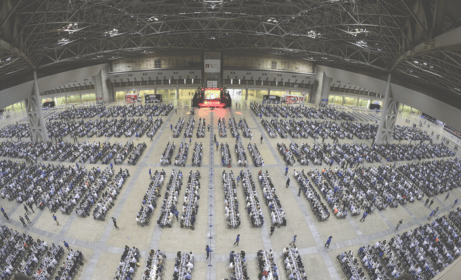
A best-of-three Edison match can easily take 40–50 minutes. Rounds are typically set to 40–45 minutes with a five-turn end-of-round procedure. You need to play at a reasonable pace from the start. Slow play is the most common issue for new Edison players, not because they’re intentionally stalling, but because the decision density is high and everything feels unfamiliar. Practice on Dueling Book or an automated simulator before your first paper event so you’re comfortable with the basic card interactions.
Side Decking Wins Tournaments
Edison has the most impactful side decking of any Yu-Gi-Oh format. Because games two and three allow you to adapt your strategy completely, many matches are decided not by who has the better main deck, but by who side decked more precisely. Key side deck cards you’ll see everywhere:
Consecrated Light shuts down DARK-attribute decks (Blackwings, Infernity, Vayu Turbo). Cyber Dragon provides a free special summon that removes an opponent’s monster via Contact Fusion with Chimeratech Fortress Dragon. Nobleman of Crossout banishes a face-down monster, devastating against decks that set Ryko or Snowman Eater. Dust Tornado gives chainable spell/trap removal for backrow-heavy matchups. System Down exists specifically for Machina Gadget, banishing all their machines. Light-Imprisoning Mirror and Shadow-Imprisoning Mirror offer attribute-specific negation that can lock out entire strategies.
Build your side deck for the specific decks you expect to face. A generic “good stuff” side board will lose to a player who dedicated two or three slots to beating your specific strategy.
Respect the Set Card
The most common mistake new Edison players make is attacking recklessly into set trap cards. In modern Yu-Gi-Oh, you power through disruption by generating so much advantage that individual traps don’t matter. In Edison, a single Dimensional Prison or Mirror Force can cost you the game. Before attacking, ask yourself: what could they have set? Is it worth walking into a potential Gorz if you don’t swing with everything? Should you poke with a smaller monster first to bait out a trap before committing your bigger play?
This cat-and-mouse dynamic is the heart of the format. Learning to read backrow, based on your opponent’s deck, the timing of their sets, and the game state, is the skill that separates intermediate Edison players from advanced ones.
Learn the Graveyard
In Edison format YuGiOh, the graveyard is a second hand. Mezuki revives Zombies. Plaguespreader Zombie recurs itself. Dandylion generates tokens when sent there. Treeborn Frog comes back every turn. Vayu Turbo summons Synchro Monsters from the graveyard. Pay attention to both your graveyard and your opponent’s at all times. Knowing what resources are available for recursion will inform your decisions about when to push, when to hold, and when to use cards like D.D. Crow or Bottomless Trap Hole for maximum impact.
Sequence Matters More Than Card Quality
Edison rewards correct sequencing more than almost any other format. The order in which you normal summon, activate spells, set traps, and enter your battle phase can completely change the outcome of a turn. Do you normal summon your tuner first to bait out Bottomless Trap Hole before special summoning your bigger monster? Do you set your Mystical Space Typhoon before entering battle so your opponent has to respect a potential trap? Do you use Foolish Burial now to set up a play for next turn, or hold it because you might draw a better discard target?
These micro-decisions add up. Every game of Edison you play will teach you something about sequencing, and that learning curve is one of the most satisfying aspects of the format.
Five Tips for Your First Edison Event
Bring a written decklist. Many Edison events require registration, and even if yours doesn’t, having a physical list helps you reconstruct your deck between rounds. Ask about house rules. Some communities play with minor banlist adjustments. Confirm before you register. Play your own deck for at least 20 games online before playing paper. You need to know your lines, your outs, and your side deck plan for common matchups. Don’t be afraid to ask your opponent about rulings. Edison’s community is overwhelmingly friendly to new players. If you’re unsure about ignition priority timing or a damage step interaction, ask. Most opponents will happily explain. And finally, have fun losing. You will lose games to cards and plays you didn’t see coming. That’s the format teaching you. Every loss in Edison contains a concrete lesson you can apply next time.
Frequently Asked Questions About Edison Format YuGiOh

What is Edison format in Yu-Gi-Oh and why is it called Edison?
Edison format is a community-maintained Yu-Gi-Oh format frozen to the March 2010 banlist and card pool (through The Shining Darkness). It’s named after the Shonen Jump Championship held in Edison, New Jersey in April 2010, which many players consider the peak of synchro-era competitive play. The format is not officially supported by Konami. It’s entirely organized and maintained by the player community.
What cards are banned in Edison Format and where can I find the official banlist?
Edison uses the Konami TCG March 2010 Forbidden and Limited list. The community-maintained version, including any minor community adjustments, is available on edisonformat.com and the Edison Format Discord server. Key banned cards include Heavy Storm, Change of Heart, Snatch Steal, and the full list of 2010-era forbidden cards. For broader context on how Yu-Gi-Oh banlists work and change, check our coverage of yugioh banlist updates and changes.
Which Yu-Gi-Oh format is better, Goat or Edison, and what are the key differences?
Neither is objectively better. They serve different tastes. Goat format (April 2005) has a smaller card pool, slower pace, and Fusion-only Extra Deck. Edison (March 2010) has a larger card pool, Synchro Summoning, more viable decks, and faster (but still interactive) gameplay. Goat is chess-like attrition. Edison is strategic combat with explosive synchro turns. Most players who try both prefer whichever matches their personal play style. For most returning or new players in 2026, Edison is the better starting point because the community is larger and the deck variety keeps things fresh longer.
What is the best deck in Edison Format and what are the current top-tier options?
There is no single “best deck,” which is one of Edison’s greatest strengths. Quickdraw Dandywarrior, X-Sabers, and Infernity are generally considered Tier 1 for their consistency and ceiling. Gladiator Beast, Lightsworn, Blackwings, and Vayu Turbo are strong Tier 2 options. Frog Monarchs, Anti-Meta Stun, and Zombie Synchro are viable at every level. The “best” deck for you depends on your play style, budget, and local meta.
Why play Edison Format instead of modern Yu-Gi-Oh?
Edison appeals to players who want interactive, skill-intensive games where both players make meaningful decisions every turn. Modern Yu-Gi-Oh is faster, with longer combo sequences and games that often end in the first few turns. Edison’s trap-heavy pace, smaller combo ceiling, and diverse metagame offer a different competitive experience. Many players enjoy both. They’re not mutually exclusive. But if modern Yu-Gi-Oh’s speed has pushed you away from the game, Edison format YuGiOh is the most accessible on-ramp back.
What can I expect if I play Edison for the first time?
Longer games, more interaction, and a steeper learning curve around trap timing, ignition priority, and damage step rulings. You’ll also find one of the friendliest competitive communities in all of Yu-Gi-Oh. Come with a deck you’ve practiced online, a side deck built for common matchups, and the willingness to ask questions about rulings. You’ll have a great time.
How much does it cost to build a competitive Edison Format deck?
Budget decks like Anti-Meta Stun or Gladiator Beast start at $25–$50 in singles. Mid-tier options like Frog Monarchs or Blackwings run $40–$80. The most expensive competitive builds (full Quickdraw or Infernity) top out around $100–$150 for the complete main, Extra, and side decks. This is dramatically cheaper than modern Yu-Gi-Oh, where a single meta deck can cost several hundred dollars. For tracking values on the specific cards you need, our yugioh card value and price tracking guide can help you time your purchases.
Where can I find Edison Format tournaments and communities in 2026?
The Edison Format Discord is the central hub for online tournaments, local event listings, and community discussion. Dueling Book is the primary platform for online play. In-person events are running at local game stores in growing numbers worldwide. The Discord maintains a regional directory. Content creators on YouTube and community writers on edisonformat.com produce regular format analysis and decklists. The community is growing fast and is genuinely welcoming to new players.
If you’re just getting into Yu-Gi-Oh for the first time and Edison feels like too much too soon, our how to play yugioh beginners guide covers the fundamentals before you jump into any competitive format. But if you already know the basics and want a format that rewards every hour you invest in learning it, Edison format YuGiOh is where to start, and where to stay.

